Resources · Job Hunting & Contracts
Job Hunting & Contracts
Neurology workforce, compensation trends, and contract considerations.
Neurologist Compensation
Here, we are going to talk about:
- Why is there going to be a big need for physicians?
- Why neurology in particular?
- What is the current average neurologist compensation?
- What is the trend compared with previous years?
- How is it compared with other healthcare professionals?
Why is there going to be a big need for physicians than ever before?
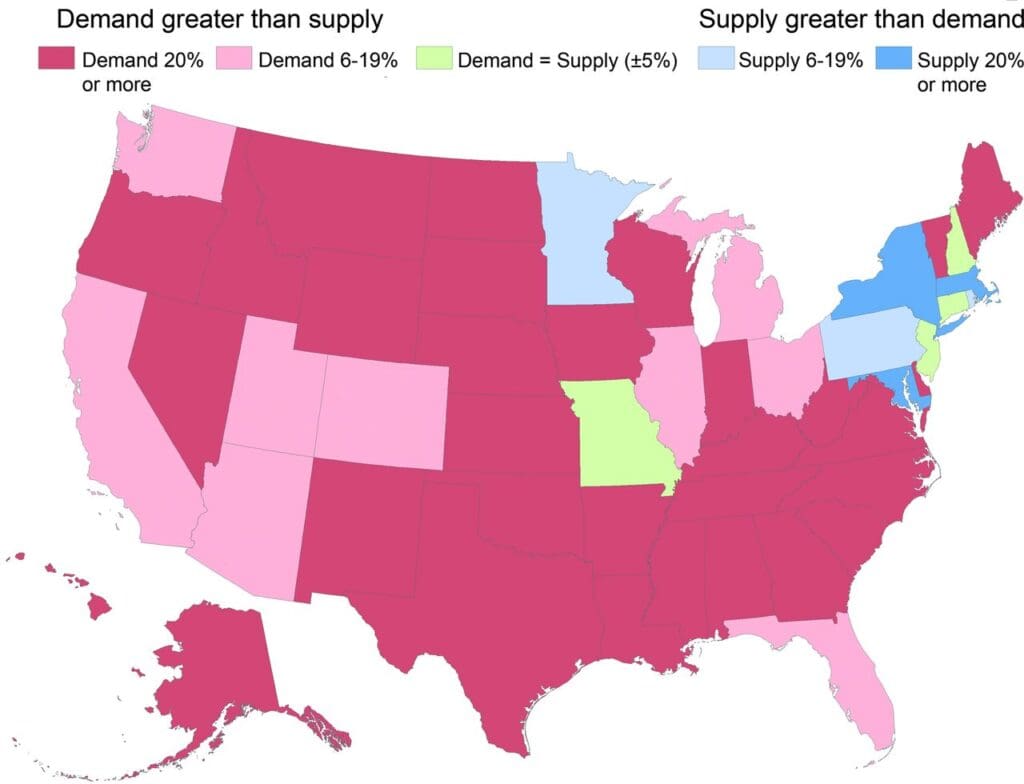
- We are already in a shortage of physicians. Currently the US has 2.4 physicians per 1,000 population compared with 4–6 in other advanced countries.
- The baby boomer generation (1946–1964), which represents 20% of the US population, is now turning old; with most of them turning >60 they will need more physicians.
- The same goes for physicians — baby boomer generation physicians are now retiring with no adequate supply to replace them.
- A limited number of new physicians is another problem, caused in part by the expensive education and in part by the congressional cap on training spots (a fixed number of funded residency spots since 1997).
Why is neurology in particular going to face a big shortage?
- With an aging population, neurologists will be needed more.
- Among medical specialties, neurology saw a lot of changes over the past decade. Stroke is a good example, with new lines of treatment requiring neurology coverage 24/7 in tertiary care facilities.
- Let's look at the numbers:
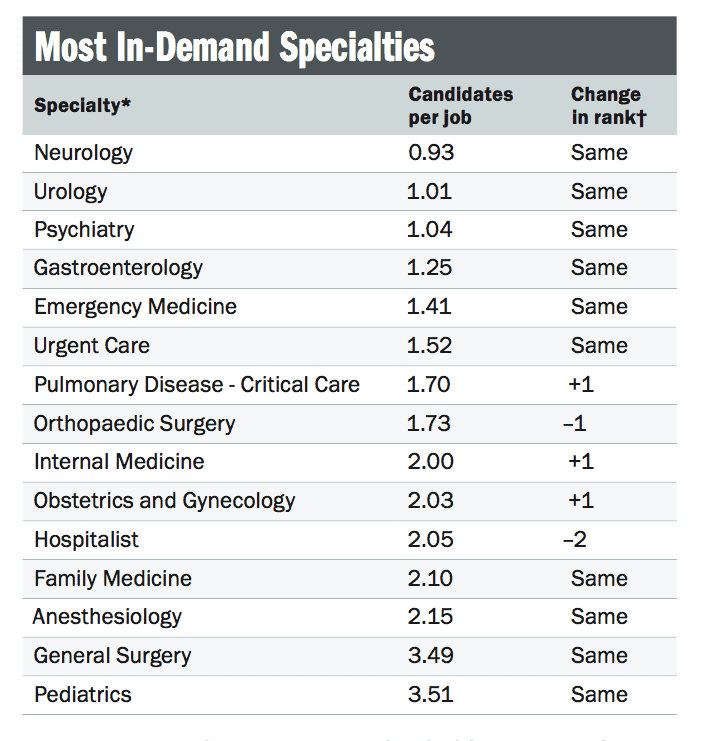
- Most needed specialties: Family medicine, psychiatry, internal medicine & gynecology (Medscape 2019)
- Most difficult to recruit specialties: Neurology – Urology – Psychiatry – GI (Medicusfirm 2019)
- Most in-demand specialties: Neurology – Urology – Psychiatry – GI (PracticeLink 2019)
- This is mainly because there are fewer available neurologists compared with other specialties.
What is the current average neurologist compensation?
- It really depends on setting, location and specialty.
- Academics are lowest, private practice is highest.
- Behavioral is lowest, neurocritical and neurohospitalists are highest.
- East coast is lowest, midwest and southeast are highest.
In 2018, this was my experience during my post-residency job search:
- Neurohospitalist: Midwest positions, hospital employed, offered an average of 300–340K compared with 250–300K on the east coast.
- General clinic: mostly RVU based in all locations — you get what you work. An example would be 300K for 5,000 RVUs with $50–60 per excess RVU.
- Academics: varies widely, 200–300K with lower numbers for clinic settings and higher for inpatient settings.
Let's look at other statistical websites — keep in mind they include academics, which will sink the numbers a little bit:
- Medscape: average of 267K in 2019.
- Merritt Hawkins: average of 301K in 2019.
- Doximity: average of 303K in 2019.
So, if 300K is the average (Doximity and Merritt Hawkins), what is the average for academic and non-academic TOTAL income:
- 200K for academics and 400K for non-academics.
- 400K comes from a base salary of 300–350K with 50–100K for additional call pay or tele-neurology.
How is it compared with previous years?
- Medscape: increased from 244 in 2018 to 267 in 2019 — a 9.4% increase (the 4th place in percentage increase in salary).
How does physician compensation compare with other countries?
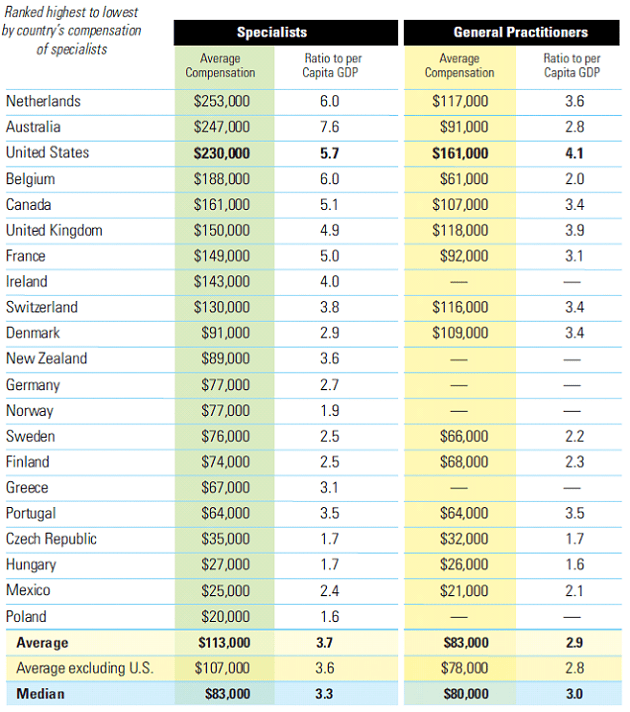
- The US ranks in 3rd place in highest specialist salaries, after the Netherlands and Australia.
- The US ranks in 1st place for general practitioner salaries.
Why is there a big need for physicians than ever before?
- The US has only 2.4 active physicians per 1,000 population, which is already at the bottom of the chart among other developed countries.
- Moreover, the baby boomer generation (1946–1964), which represents about 20% of the population, is now moving toward the >60 age group. A more elderly population will need more physicians.
- Regarding physicians, the same goes — baby boomer physicians are now retiring and leaving the workforce.
- Moreover, there are not enough physicians entering the workforce compared with the population growth.
- Although we can get IMG physicians (trained outside the US), the capped number of available residencies stands against that.
- So basically, the US population is getting older, physicians are retiring, and there is no adequate number of physicians entering the workforce to replace them.
What about neurology? Why is neurology more needed now than ever?
- Again, an aging population will need more neurologists. Stroke, dementia, neurodegenerative disorders and movement disorders, which are the main bulk of neurology patients, are mainly elderly.
- Neurology has seen more advances in treatment than any other specialty (maybe excluding oncology). All hospitals now are seeking neurologists to secure their share of stroke patients.
- New disorders are being uncovered that will need to be followed with a neurologist. Neuroimmunology is an example.