Neurology, distilled.
Landmark trials with structured baseline tables. Real-world cases with discussion. Specialty references, board prep, and a journal-club reading list — built and maintained by clinicians, free for the community.
Everything a neurologist needs, in one place.
Each section is built around clinical workflow — references for service, prep for boards, discussion for tough cases, and the evidence base behind every decision.
 NeuroTrials
Search 850+ landmark trials with structured baseline tables, exclusion criteria, and AI-assisted summaries.
Search trials → NeuroWiki
Specialty reference pages — pathophysiology, diagnostic frameworks, and evidence-based management, curated by clinicians.
Open the wiki → NeuroResidents
On-call templates, neuro-exam frameworks, summaries, and clinical pearls organised by rotation.
Open the resident library → NeuroJournal
Curated reading list. New articles from JAMA Neurology, Stroke, Neurology, and Lancet Neurology — distilled into 5-minute summaries.
Browse the journal → NeuroBoards
Practice questions, flashcards, study notes, and progress tracking — for RITE, boards, and continuing education.
Start prep →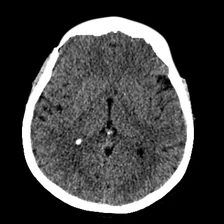 NeuroCasesNEW
Members share real-world cases with images, polls, and discussion. Vote on next steps, learn from outcomes, build the community.
Browse cases →Four atlases, one brain
Modernised plates, an interactive 3D brain, neuropathology slides, and a labelled MRI and CT atlas.
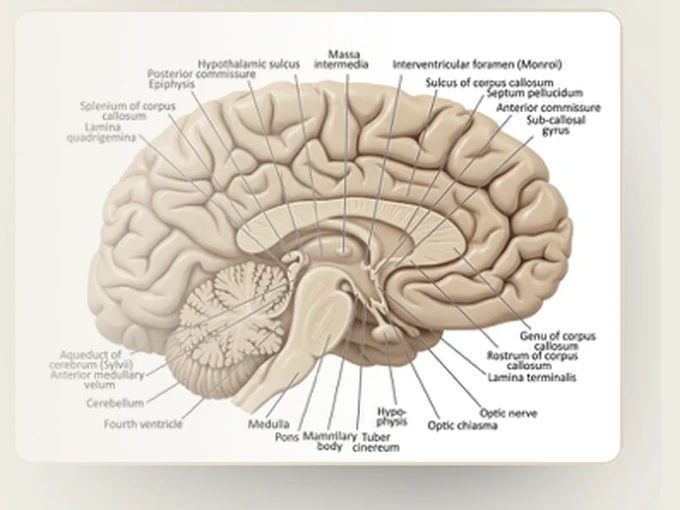
Gray’s plates, redrawn and relabelled for the neurology reader.
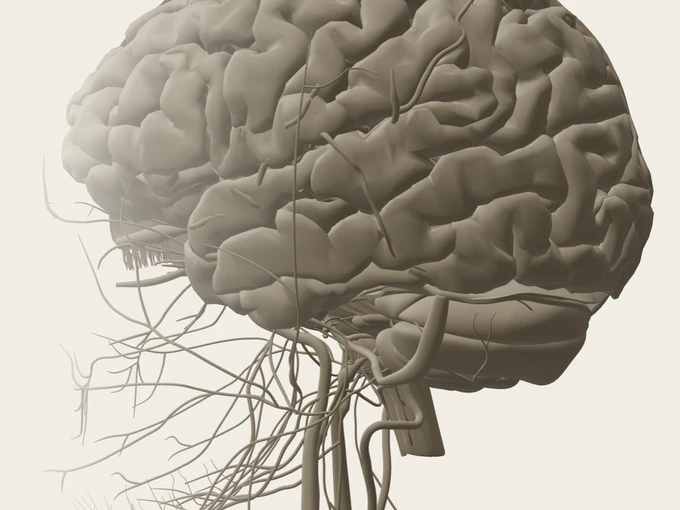
Turn the brain in your hands, then read any structure’s lesion syndrome.
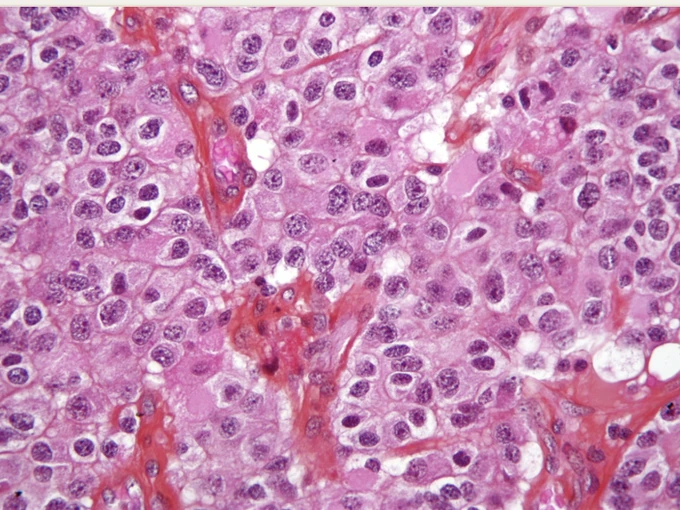
Slides across 47 diagnoses, each with a written reading guide.
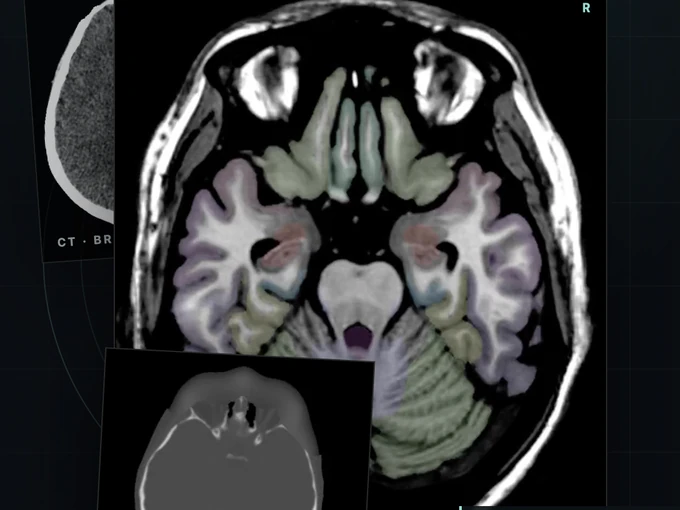
MRI and CT in three planes, with the anatomy painted on.
Recently added trials
The most recent landmark trials reviewed across all 9 specialties — structured summaries, baseline tables, and exclusion criteria.
In adults with ALS of ≤18 months duration and FVC ≥70%, test whether two nasojejunal faecal microbiota transplantations vs sham procedure increase circulating regulatory T cells and modify disease progression.
FMT did not meet its primary immunological endpoint: 8/18 (44%) FMT recipients vs 2/10 (20%) sham achieved a ≥20% rise in circulating Tregs at 6 months (OR 3.20; 95% CI 0.59–25.36; p=0.21).
View Summary →In memory-clinic outpatients with subjective cognitive decline, MCI, or mild dementia, does earlier disclosure of plasma p-tau217 and NfL increase etiologic diagnostic certainty, change clinical management, and affect emotional outcomes versus delayed disclosure?
Earlier disclosure of plasma p-tau217 and NfL markedly increased very high-confidence (≥90%) etiologic diagnosis at 3 months versus delayed disclosure (56/112 [50.0%] vs 5/108 [4.6%]; P<.001).
View Summary →To evaluate the efficacy and safety of adjunctive cenobamate 100, 200, and 400 mg/day vs placebo in Asian adults with uncontrolled focal seizures despite 1–3 antiseizure medications.
Adjunctive cenobamate produced dose-related reductions in 28-day focal-seizure frequency during the 6-week maintenance phase — median percent change −42.6%, −78.3%, and −100% for 100, 200, and 400 mg/day vs −25.9% for placebo (all p < 0.001).
View Summary →In adults with medically refractory chronic cluster headache (CCH), does paresthesia-free burst occipital nerve stimulation (ONS) prevent attacks better than placebo (device off), with tonic ONS evaluated open-label thereafter?
Burst occipital nerve stimulation did not reduce chronic cluster headache attacks vs placebo at 12 weeks; ≥30% responders 18.8% vs 50.0% (placebo higher, p=0.042).
View Summary →Phase 3 trial of latozinemab (anti-sortilin IgG1 mAb) 60 mg/kg IV Q4W vs placebo for 96 weeks in symptomatic and at-risk carriers of heterozygous loss-of-function GRN mutations causing frontotemporal dementia.
Latozinemab did not slow FTD-GRN progression on the primary CDR plus NACC FTLD-SB endpoint at Week 96 — in fact there was numerical worsening (LSM difference +1.509; 95% CI −0.959 to 3.976; p=0.2278) in symptomatic participants.
View Summary →In treatment-naive patients with SMA aged 2 to <18 years who could sit but never walked independently, to evaluate whether a single intrathecal dose of onasemnogene abeparvovec (OAV101 IT, 1.2 × 10^14 vg) improves motor function versus sham procedure over 52 weeks.
Intrathecal onasemnogene abeparvovec improved motor function on the HFMSE at 52 weeks in treatment-naive SMA patients aged 2 to <18 years who could sit but not walk (LSM change 2.39 vs 0.51; LSM difference 1.88, 95% CI 0.51–3.25; P=0.0074).
View Summary →Evaluate whether intravenous eptinezumab 400 mg vs placebo prevents episodic cluster headache attacks in adults (ALLEVIATE).
Eptinezumab did not reduce weekly cluster-headache attacks over weeks 1-2 vs placebo in adults with episodic cluster headache (LS mean change -4.0 vs -4.6; between-group difference 0.7; 95% CI -1.3 to 2.6; P=0.50).
View Summary →Phase IIb/III RCT testing whether oral blarcamesine (ANAVEX2-73), a sigma-1 receptor agonist, is safe and slows cognitive/functional decline in early Alzheimer's disease (MCI or mild dementia) over 48 weeks versus placebo.
Blarcamesine slowed cognitive decline on ADAS-Cog13 at 48 weeks in early AD (adjusted mean difference vs placebo −2.027; 95% CI −3.522 to −0.533; P=0.008; 36.3% less decline), meeting one of the two co-primary endpoints under the prespecified multiplicity rule.
View Summary →NeuroJournal — this week's picks
High-yield new articles from JAMA Neurology, Stroke, Neurology, and Lancet Neurology — distilled into 5-minute summaries.

The first randomized trial beyond 24 hours found that thrombectomy improved 90-day function in a highly selected, CT-perfusion-defined group with anterior-circulation occlusion at 24 to 72 hours, at the cost…
Dual antiplatelet therapy and direct oral anticoagulants anchor secondary prevention after noncardioembolic ischemic stroke but are constrained by bleeding risk. The phase 3 OCEANIC-STROKE trial of asundexian, newly published in…
Tavapadon (Juvmo), approved by the FDA in September 2026, is a once-daily dopamine agonist and the first to selectively target D1/D5 receptors. This review covers the mechanism, the TEMPO trials,…

CIDP treatment has long rested on IVIG, corticosteroids, and plasma exchange, with efgartigimod (FcRn) the only recent mechanistic addition. The CAPTIVATE phase 3 interim analysis of claseprubart, an anti-C1s monoclonal…
MRI alone frequently fails to distinguish true glioma progression from pseudoprogression and radiation necrosis, delaying treatment decisions. On September 14, 2026, the FDA approved Pixclara (floretyrosine F 18, 18F-FET) as…

Topiramate has anchored oral preventive migraine therapy for two decades, while CGRP-targeted therapies have been positioned mainly on tolerability. The TEMPLE phase 3b head-to-head trial (Lancet Neurology, September 2026) randomized…
Approved exon-skipping ASOs for DMD have had limited long-term functional-preservation data. At the World Muscle Society Congress (Sept 29-Oct 3, 2026, Hiroshima), 5-year investigator-initiated data for brogidirsen (NS-089/NCNP-02), an exon-44-skipping…
This week's wiki picks
A rotating set of reference pages across specialties — pathophysiology, diagnostic frameworks, and management. New picks every week.
This page covers two overlapping clusters: lysosomal storage diseases (Fabry, Pompe, Gaucher, Niemann-Pick, Tay-Sachs, MPS) — many now treatable with enzyme replacement, substrate reduction, or chaperones — and neurocutaneous syndromes (NF1, NF2,…
Read Full Article →Acute Migraine: Emergency Department Migraine accounts for approximately 3-5% of all ED visits. The goals of ED management are rapid pain relief, control of nausea/vomiting, and safe disposition. Evidence strongly supports dopamine…
Read Full Article →Hemostasis & Anticoagulant Reversal in ICH Hematoma expansion (HE) — occurring in roughly one-third of ICH patients — is the most potent modifiable predictor of poor outcome. Two distinct therapeutic strategies target…
Read Full Article →Thrombolysis for Minor Stroke: The Critical Distinction Between Disabling and Non-Disabling Deficits Minor strokes—typically defined as NIHSS ≤5—account for a substantial proportion of acute ischemic stroke presentations. For years, clinicians debated whether…
Read Full Article →Systemic inflammatory and autoimmune diseases frequently have neurologic manifestations, and recognizing these connections allows correct diagnosis and integrated multidisciplinary care. The inflammatory / autoimmune lab panel — ANA, anti-dsDNA, anti-Smith, anti-SSA/SSB (Ro/La),…
Read Full Article →The thalamus is the relay station of the brain — almost every sensory pathway (except olfaction) and most motor and cognitive circuits pass through one of its dozens of nuclei. Thalamic lesions…
Read Full Article →Deep Brain Stimulation in Parkinson's Disease Deep brain stimulation (DBS) is the most established and evidence-based surgical therapy for Parkinson's disease. Since its approval in the late 1990s, DBS has evolved from…
Read Full Article →Recent NeuroCases
Cases shared by members — discuss, vote, learn from outcomes.
Admin · 6 months ago
76F, baseline mRS 1, AF on sub-therapeutic warfarin, global aphasia with R-sided hemiplegia. NCCT ASPECTS 3, left M1 occlusion, LKW 15 h ago. Late window — pull straight to angio or get CTP first?
Admin · 6 months ago
62F on apixaban, aphasia LKW Tuesday 6 PM, worsened Wednesday noon (18h). NIHSS 16, M3 anterior division occlusion, favorable mismatch. Late window — what do you do?
YOUR TURN Post a Case Share your case. Let the community help with decision-making. Sign in to postOpen library. Closed community.
Anyone can read. Members — verified clinicians and trainees — can post cases, comment, vote, and contribute to the wiki. No ads. No paywalls.
Every trial summary, wiki page, case, and journal article is open — no signup required.
Free registration for clinicians and trainees. Post cases, comment, vote in polls, add wiki content.
Your name, photo, position, and institution appear on everything you contribute — build your clinical brand.
Built by clinicians. Maintained by the community.
Founded and maintained by Dr. Ahmed Koriesh, Stroke Director at Cleveland Clinic Florida. Powered by 1050 clinician members who contribute, vet, and discuss.