Neurology, distilled.
Landmark trials with structured baseline tables. Real-world cases with discussion. Specialty references, board prep, and a journal-club reading list — built and maintained by clinicians, free for the community.
Everything a neurologist needs, in one place.
Each section is built around clinical workflow — references for service, prep for boards, discussion for tough cases, and the evidence base behind every decision.
 NeuroTrials
Search 850+ landmark trials with structured baseline tables, exclusion criteria, and AI-assisted summaries.
Search trials → NeuroWiki
Specialty reference pages — pathophysiology, diagnostic frameworks, and evidence-based management, curated by clinicians.
Open the wiki → NeuroResidents
On-call templates, neuro-exam frameworks, summaries, and clinical pearls organised by rotation.
Open the resident library → NeuroJournal
Curated reading list. New articles from JAMA Neurology, Stroke, Neurology, and Lancet Neurology — distilled into 5-minute summaries.
Browse the journal → NeuroBoards
Practice questions, flashcards, study notes, and progress tracking — for RITE, boards, and continuing education.
Start prep →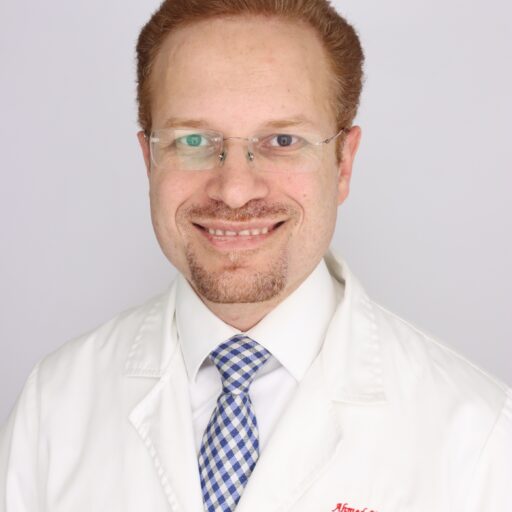 NeuroCasesNEW
Members share real-world cases with images, polls, and discussion. Vote on next steps, learn from outcomes, build the community.
Browse cases →Recently added trials
The most recent landmark trials reviewed across all 9 specialties — structured summaries, baseline tables, and exclusion criteria.
To determine the intra-individual variability of time to CD19+ B-cell repopulation after each ocrelizumab dose when using CD19+ B-cell guided interval dosing in relapsing MS, as a subgroup analysis of the ongoing BLOOMS randomised trial.
Time from last ocrelizumab dose to CD19+ B-cell repopulation ≥ 0.01 × 10^9 cells/L varied widely between individuals (range 20.6–72.1 weeks; mean 32.8 ± 7.0)
View Summary →To evaluate the effectiveness and safety of ocrelizumab in self-identified Black and Hispanic people with relapsing multiple sclerosis, populations historically underrepresented in pivotal MS trials.
50.5% of CHIMES participants achieved NEDA-3 at week 48 and 46.7% at week 96 (vs 55.5% and 48.5% in OPERA I/II)
View Summary →To perform a pooled individual patient-level data meta-analysis of two randomized sham-controlled trials to characterize with greater statistical power the effect of electromagnetic network-targeted field (ENTF) brain stimulation therapy on disability and recovery after subacute ischemic stroke.
Freedom-from-disability (mRS 0-1) at 8-12 weeks was higher with active ENTF than sham (33.8% vs 11.9%; P=0.005)
View Summary →To determine whether low-dose ticagrelor (60 mg twice daily) plus aspirin is superior to clopidogrel plus aspirin for preventing early neurological deterioration (END) within 7 days in patients with high-risk non-disabling ischemic cerebrovascular events (HR-NICE), without increasing bleeding risk.
Among patients with HR-NICE treated within 24 hours of onset, low-dose ticagrelor (60 mg BID) plus aspirin significantly reduced early neurological deterioration within 7 days and improved 90-day excellent functional outcome versus clopidogrel plus aspirin, without increasing bleeding risk. This regimen offers a viable alternative DAPT strategy where CYP2C19 rapid genotyping is unavailable.
View Summary →To explore the effects of motor imagery (MI) and action observation (AO), each combined with standard rehabilitation, on walking, fatigue, and trunk control in people with multiple sclerosis (pwMS).
In ambulatory pwMS with EDSS <4.0, adding 20 minutes of MI or AO to standard rehabilitation produced significantly greater improvements in walking distance and fatigue than standard rehabilitation alone, with no superiority between MI and AO and no significant between-group difference in trunk control (though TIS improved numerically across all groups). Findings are exploratory and require confirmation in larger, adequately powered trials.
View Summary →To evaluate the feasibility, clinical efficacy, and assessment capabilities of MultiSensy — a multimodal platform integrating immersive virtual reality with synchronous transcutaneous sensory neurostimulation — for upper-limb sensorimotor recovery in chronic stroke.
MultiSensy produced significantly greater upper-limb motor improvement than conventional rehabilitation: FMA-UE 13.17 ± 1.30 vs 7.54 ± 1.48 (P = 0.01)
View Summary →To assess whether task-oriented (TO) upper-limb rehabilitation, with or without non-immersive virtual reality, improves upper limb function and induces brain plasticity in progressive multiple sclerosis patients on B-cell depleting therapy.
In progressive MS patients on B-cell depleting therapy, task-oriented rehabilitation (with or without non-immersive VR) did not improve the primary 9-HPT outcome; ABILHAND and ARAT-left improved across the whole sample without between-group differences, and only ARAT-right at T2 favored TO over CG (TO-VR vs CG was a trend). Both TO-VR and TO induced increased functional connectivity that correlated with ABILHAND improvement.
View Summary →To report 5-year safety and functional outcomes of delandistrogene moxeparvovec gene therapy in ambulatory patients with Duchenne muscular dystrophy (DMD) from the phase 1/2a Study 101, with post hoc comparisons to propensity-score-weighted external controls and natural history predictions.
All 4 treated patients (mean age 10.2 years) remained ambulant at 5 years post-infusion
View Summary →NeuroJournal — this week's picks
High-yield new articles from JAMA Neurology, Stroke, Neurology, and Lancet Neurology — distilled into 5-minute summaries.

The 2026 AHA/ASA guideline no longer requires advanced perfusion imaging to qualify a 6-24 hour anterior-circulation large-vessel occlusion for thrombectomy - non-contrast CT plus CTA suffice. That relaxation applies to…
[REVIEW] Comprehensive disease review of the hardest recurring bedside decision: whether, when and with what to (re)start anticoagulation after intracranial hemorrhage, and whether to anticoagulate at the low end of…

With METEOROID reporting a 68% relapse-risk reduction in AAN 2026 poster/abstract data and an FDA target action date of January 10, 2027, satralizumab could become the first on-label MOGAD therapy.…

With FDA approval of LEQEMBI IQLIK for subcutaneous initiation on July 13, 2026, lecanemab became the first anti-amyloid therapy in the United States that can be given subcutaneously from initiation…
The FDA's August 19 acceptance and priority review of ecopipam's NDA sets up the first genuinely new mechanism for pediatric Tourette syndrome since haloperidol — selective D1 receptor antagonism without…
FDA approval of oveporexton (Orzeyful), the first drug to directly restore orexin signaling, marks a shift from symptomatic stimulants and oxybates to disease-mechanism therapy in NT1 — the article reviews…
The near-simultaneous FDA clearances of the Elecsys pTau217 plasma test (first rule-in/rule-out), PrecivityAD2 (down to age 40), and approval of the Tauklarify tau PET tracer create a practical diagnostic algorithm…
This week's wiki picks
A rotating set of reference pages across specialties — pathophysiology, diagnostic frameworks, and management. New picks every week.
Paraneoplastic neurologic syndromes (PNS) are remote effects of cancer mediated by an immune response directed against onconeural antigens — proteins normally expressed only in neurons but ectopically expressed by certain tumors. The…
Read Full Article →The lower cranial nerves — glossopharyngeal (IX), vagus (X), spinal accessory (XI), and hypoglossal (XII) — exit the brainstem through the jugular foramen and adjacent canals. They share much of their course…
Read Full Article →German PD Pharmacotherapy Guideline (DGN S2k, 2024) This is a condensed summary of the German Society for Neurology (DGN) S2k-Leitlinie for the diagnosis and treatment of Parkinson's disease, developed in collaboration with…
Read Full Article →The somatosensory system encompasses the pathways carrying sensation from the body's surface and deep tissues to the brain. Two separate ascending systems with different decussation points — the dorsal column-medial lemniscus system…
Read Full Article →MRI Sequences: A Clinician's Guide The MRI report can feel like a foreign language until you learn its grammar — and the grammar is the pulse sequence. Each sequence weights the image…
Read Full Article →NMOSD: Diagnosis & Clinical Features Neuromyelitis optica spectrum disorder (NMOSD) is a severe, antibody-mediated inflammatory CNS disease defined by the presence of aquaporin-4 IgG (AQP4-IgG). First distinguished from MS in 2004 by…
Read Full Article →Gene Therapy, RNA Therapeutics & Future Directions The neuromuscular disease landscape has been transformed by the emergence of gene replacement therapy, RNA-targeting therapeutics, and targeted biologics. Over the past decade, the FDA…
Read Full Article →Recent NeuroCases
Cases shared by members — discuss, vote, learn from outcomes.
Ahmed Koriesh · 4 months ago
76F, baseline mRS 1, AF on sub-therapeutic warfarin, global aphasia with R-sided hemiplegia. NCCT ASPECTS 3, left M1 occlusion, LKW 15 h ago. Late window — pull straight to angio or get CTP first?
Ahmed Koriesh · 4 months ago
62F on apixaban, aphasia LKW Tuesday 6 PM, worsened Wednesday noon (18h). NIHSS 16, M3 anterior division occlusion, favorable mismatch. Late window — what do you do?
YOUR TURN Post a Case Share your case. Let the community help with decision-making. Sign in to postOpen library. Closed community.
Anyone can read. Members — verified clinicians and trainees — can post cases, comment, vote, and contribute to the wiki. No ads. No paywalls.
Every trial summary, wiki page, case, and journal article is open — no signup required.
Free registration for clinicians and trainees. Post cases, comment, vote in polls, add wiki content.
Your name, photo, position, and institution appear on everything you contribute — build your clinical brand.
Built by clinicians. Maintained by the community.
Founded and maintained by Dr. Ahmed Koriesh, Stroke Director at Cleveland Clinic Florida. Powered by 866 clinician members who contribute, vet, and discuss.